

The future of urban living is transforming how people choose homes, commute to work, spend their leisure time and invest in real estate. Modern cities are no longer judged only by skyscrapers, luxury apartments or shopping malls. Today, residents increasingly value convenience, connectivity, sustainability, safety and access to essential services.
Dubai is an important example of this transformation. The emirate is investing in long-term urban planning, public transport, green spaces, integrated communities and improved quality of life. Its Dubai 2040 Urban Master Plan provides a strategic framework for guiding urban development over the coming decades.
For Indian investors exploring Dubai property, understanding the future of urban living can help them evaluate residential locations beyond their current appearance. A well-connected neighbourhood with useful amenities may offer a different investment profile from a project that relies mainly on luxury branding or speculative expectations.
At Skyline Infrastructure Investments, we believe real estate decisions should be based on research, location fundamentals, infrastructure, demand and long-term suitability. This guide explores seven important trends shaping urban living in Dubai and explains what they could mean for homebuyers and property investors.
What Is the Future of Urban Living?
The future of urban living describes the evolution of cities into more connected, sustainable, technology-enabled and people-focused environments. It combines residential development with transport, healthcare, education, workplaces, recreation and environmental planning.
In traditional urban development, housing projects could be planned separately from everyday services. Modern urban planning increasingly focuses on bringing these elements together so residents can meet more of their daily needs without lengthy journeys.
Several factors are driving this change:
- Growing demand for convenient and well-connected neighbourhoods.
- Increasing attention to environmental sustainability and energy efficiency.
- Greater use of digital technology in residential buildings.
- Expansion of public transport and pedestrian-friendly infrastructure.
- Demand for communities that support families, professionals and different lifestyles.
- Greater investor interest in locations with durable residential demand.
The future of urban living is therefore not simply about building more apartments. It is about creating places where people can live comfortably, access opportunities and maintain a better balance between work and personal life.
1. Smart Cities and Technology-Enabled Homes
Technology is becoming an important part of modern residential development. Smart access systems, digital visitor management, connected security, energy monitoring and automated building services can improve convenience for residents.
In Dubai, technology-enabled living also connects with the wider development of digital public services and smart urban infrastructure.
For example, a modern apartment may include smart lighting, temperature controls, digital locks and systems that help residents monitor energy consumption. The availability of these features varies by project, so buyers should verify exactly what is included in the property.
For landlords, technology can also simplify certain aspects of property management. Remote monitoring, digital maintenance requests and online communication may help owners manage properties more efficiently, depending on the systems available.
However, technology alone does not make a property a strong investment. Buyers should also consider service charges, maintenance arrangements, building quality and the actual demand for the apartment.
As the future of urban living develops, technology is likely to remain an important consideration, but it should complement—not replace—sound property fundamentals.
2. Sustainable Communities and Green Spaces
Sustainability is becoming a central consideration in urban planning. Green spaces, shaded pedestrian routes, landscaped parks and efficient resource management can contribute to more comfortable residential environments.
Dubai’s 2040 Urban Master Plan aims to double green and recreational spaces and establish green corridors connecting residential areas, workplaces and service centres. These are long-term planning objectives rather than a guarantee that every neighbourhood will receive the same facilities.
Official planning information is available from Dubai Municipality’s Dubai 2040 Urban Master Plan.
For residents, accessible green spaces can support outdoor activities, family recreation and community interaction. For property investors, the quality of the surrounding environment may influence a property’s appeal to potential tenants.
When assessing a sustainable residential development, examine:
- The availability and accessibility of parks.
- Shaded walking paths and outdoor recreational facilities.
- Water and energy efficiency measures.
- Landscaping and ongoing maintenance standards.
- The quality of nearby roads, public transport and community services.
A green image in a project brochure is not sufficient evidence of sustainability. Investors should verify the facilities, specifications and long-term maintenance arrangements.
The future of urban living will increasingly depend on how effectively cities balance new development with environmental quality and residents’ everyday needs.
3. Transit-Oriented Development and Better Connectivity
Connectivity is one of the most important factors in urban planning. Residents want convenient access to workplaces, schools, shopping, healthcare and leisure facilities.
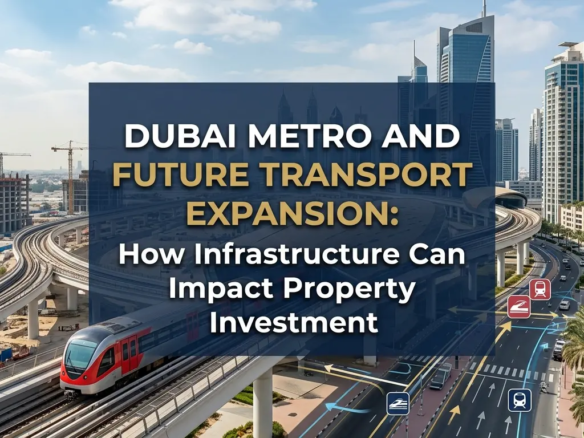
Transit-oriented development places greater emphasis on integrating housing, commercial activity and public transport. Dubai Municipality’s transit-oriented development guidance supports planning around existing and planned Metro and tram stations.
Read the official Dubai Transit-Oriented Development Manual.
For property buyers, proximity to public transport can make a location more convenient for people who prefer not to depend entirely on private vehicles. Nevertheless, the benefit depends on the actual walking distance, route availability, service frequency and accessibility of the station.
Before investing, check:
- The distance between the property entrance and the nearest operational station.
- Existing transport connections rather than relying only on proposed routes.
- Road access and expected commuting patterns.
- Availability of feeder buses, pedestrian paths and cycling facilities.
- The number and type of employers accessible from the neighbourhood.
Infrastructure announcements can influence buyer expectations, but proposed transport improvements may face delays or changes. Investors should distinguish between operational infrastructure, officially approved projects and early-stage proposals.
As the future of urban living takes shape, locations offering practical and reliable mobility may appeal to residents who value convenient daily travel.
4. The Rise of Integrated Residential Communities
Integrated communities combine housing with facilities and services that residents use regularly. These may include supermarkets, schools, clinics, fitness centres, parks, restaurants and recreational areas.
The objective is to reduce the need for residents to travel long distances for routine activities.
Dubai’s urban planning framework includes the development of vibrant, healthy communities with access to services and open spaces. This approach is relevant to both established neighbourhoods and emerging residential districts.
For families, the presence of schools, parks, healthcare and convenient shopping can influence where they choose to live. Working professionals may prioritise transport, workplaces, restaurants and fitness facilities.
Investors should therefore identify the likely tenant profile before selecting a project.
For example:
- A family-oriented apartment may benefit from convenient access to schools and everyday services.
- A smaller apartment near employment centres may appeal to professionals, depending on pricing and transport.
- A larger property in a master-planned community may attract tenants seeking more space and recreational facilities.
These are possible demand patterns, not guaranteed outcomes. Actual rental performance depends on supply, rents, unit quality, service charges and competing properties.
The future of urban living favours a more holistic approach to residential planning, in which the neighbourhood is evaluated alongside the apartment itself.
5. Flexible Homes and Changing Lifestyle Needs
Residential preferences continue to evolve as households change and more people combine work, leisure and personal responsibilities in the same environment.
A practical home may need a dedicated workspace, sufficient storage, good natural light, functional kitchens and layouts that use available space efficiently.
For investors, these considerations make floor-plan analysis especially important. Two apartments with similar floor areas may offer different levels of usability because of their room proportions, circulation space, storage and balcony arrangements.
When comparing properties, consider:
- Whether the layout supports the intended household size.
- Whether bedrooms offer useful privacy and storage.
- Whether the living area can accommodate everyday activities comfortably.
- Whether the kitchen and bathrooms have practical layouts.
- Whether the view, orientation and natural light suit the intended tenant.
Buyers should also compare the total cost of ownership rather than focusing exclusively on the advertised purchase price.
The future of urban living is not defined by apartment size alone. Functional layouts, neighbourhood facilities and the suitability of a home for its intended occupants can be equally important.
6. Wellness, Walkability and Quality of Life
A well-designed neighbourhood can influence daily routines. Access to walking routes, parks, fitness facilities, healthcare and recreational spaces can make it easier for residents to incorporate physical activity and relaxation into everyday life.
Walkability is especially valuable when essential destinations are genuinely accessible on foot. A development may advertise pedestrian-friendly design, but the practical experience also depends on shade, crossing points, pavement quality, road traffic and the distances involved.
Dubai’s long-term urban planning places emphasis on accessibility, green corridors and people-focused development.
For property investors, wellness-oriented features should be assessed as part of a broader location analysis. A swimming pool, gym or landscaped garden may enhance a building’s appeal, but these facilities also have operating and maintenance costs.
Consider the following questions before buying:
- Are the facilities suitable for the likely residents?
- Are they maintained properly?
- Are nearby amenities accessible without a car?
- Do the associated service charges make financial sense?
- Are comparable properties offering similar or better facilities?
The future of urban living is increasingly connected with quality of life, but investors should assess the real usefulness of amenities rather than simply counting them.
7. New Growth Areas and Long-Term Real Estate Opportunities
Urban growth creates opportunities for new residential communities, commercial centres and infrastructure connections. However, not every developing location will experience the same level of demand or price growth.
Dubai’s long-term urban strategy identifies several urban centres and seeks to coordinate residential development with infrastructure, economic activity and public services.
For investors, this makes location research essential. An emerging neighbourhood may offer a different entry price from an established district, but it can also involve greater uncertainty around completion timelines, amenities, transport and tenant demand.
When evaluating an emerging area, review:
- Existing population and employment centres nearby.
- Operational roads and public transport.
- Planned infrastructure and its official approval status.
- The pipeline of competing residential projects.
- Developer delivery history and construction progress.
- Current comparable rents and completed-property transactions.
- Service charges, payment terms and exit options.
Avoid assuming that a lower launch price automatically means better value. A property should be assessed against comparable projects, its delivery risk, expected holding period and the quality of the surrounding area.
For Indian investors, currency movements, international transfer costs, financing terms and applicable Indian tax and reporting obligations should also be considered.
The future of urban living may create opportunities in emerging communities, but research and disciplined financial analysis remain essential.
Dubai 2040: A Roadmap for the Future of Urban Living
Dubai’s 2040 Urban Master Plan is a significant reference point for understanding the city’s long-term development priorities. Launched in 2021, it provides a strategic framework for urban growth, accessibility, green spaces, community facilities and environmental quality.
The plan includes several important targets for 2040:
| Planning objective | Stated target |
|---|---|
| Green and recreational spaces | Double in size |
| Nature reserves and rural natural areas | 60% of the emirate’s total area |
| Public beaches | Increase in length by 400% |
| Education and health facility land | Increase by 25% |
| Commercial activity land | Reach 168 square kilometres |
These figures represent official long-term planning objectives, not completed outcomes or guaranteed investment results. Investors should consult current government updates when evaluating a particular location.
Source: UAE Government — Dubai 2040 Urban Master Plan.
The plan also promotes the 20-minute city concept, which seeks to make everyday destinations more accessible through walking, cycling and public transport. The precise accessibility of any property depends on its location and the infrastructure available around it.
For property buyers, the main lesson is that long-term urban planning can help identify factors worth investigating. It cannot establish, by itself, whether a specific apartment will appreciate or generate a particular rental yield.
How the Future of Urban Living May Influence Dubai Property Investment
The future of urban living has implications for how investors compare residential properties. Instead of concentrating only on architectural design or launch prices, buyers can evaluate how a property fits into its wider urban environment.
Location and connectivity
Properties with convenient access to employment, transport and everyday services may appeal to particular tenant groups. However, the benefit should be tested against current rents, comparable supply and the property’s total cost.
Rental demand
A neighbourhood’s amenities and accessibility may influence tenant preferences. Investors should examine recent comparable rental evidence rather than relying on general claims about demand.
Operating costs
Modern amenities and extensive facilities can enhance convenience but may also increase service charges. Net rental yield is therefore more informative than gross yield alone.
Capital appreciation
Infrastructure, population trends, employment opportunities and improvements in neighbourhood quality may support property demand over time. They do not guarantee price appreciation, and the market may already reflect some anticipated benefits in the purchase price.
Exit flexibility
Investors should consider who might purchase the property in the future. A home that suits a clearly identifiable group of end users may have a different resale profile from a highly specialised unit.
At Skyline Infrastructure Investments, our approach is to examine these factors together. The future of urban living should be used as a framework for evaluating property fundamentals, not as a promise of investment returns.
How Indian Investors Can Prepare for the Future of Urban Living
Indian buyers considering Dubai real estate can use a structured process to assess opportunities.
Step 1: Define the investment objective. Decide whether the priority is rental income, personal use, long-term capital growth or portfolio diversification.
Step 2: Set a realistic budget. Include the purchase price, applicable transaction costs, furnishing, financing, service charges and a reserve for vacancies and maintenance.
Step 3: Compare locations. Review connectivity, employment centres, schools, healthcare, shopping and recreational facilities relevant to the intended tenant or end user.
Step 4: Verify the property and developer. Check ownership documentation, project registration where applicable, construction status, payment terms and the relevant regulatory safeguards.
Step 5: Calculate net yield. Deduct realistic operating expenses from expected annual rent before comparing investment alternatives. Use conservative rental assumptions.
Step 6: Review cross-border considerations. Understand applicable UAE and Indian tax rules, foreign exchange exposure, banking requirements and reporting obligations with qualified professionals.
Step 7: Plan your exit. Consider your intended holding period, likely resale audience, competing supply and the costs associated with selling.
The future of urban living can help investors ask better questions about a property, but the final decision should reflect their own budget, risk tolerance and investment objectives.
Why Research Matters in the Future of Urban Living
Dubai offers a range of residential environments, from established central districts to emerging master-planned communities. Each location has different characteristics, price points, transport connections and tenant profiles.
At Skyline Infrastructure Investments, we provide research-driven, investor-focused guidance for Indian investors exploring Dubai property. Our objective is to help buyers understand locations, compare residential options, assess risks and make more informed decisions.
We encourage investors to distinguish verified facts from marketing projections and to compare the full financial picture before committing capital.
The future of urban living is a useful lens for understanding the direction of city development. Yet successful property selection still requires due diligence, realistic assumptions and careful financial planning.
Conclusion: Building a Smarter Approach to Urban Living
The future of urban living is about more than new buildings. It involves connected neighbourhoods, efficient mobility, sustainable planning, useful amenities, flexible homes and better access to everyday services.
Dubai’s 2040 Urban Master Plan provides a long-term framework for several of these priorities. For Indian property investors, understanding that framework can help identify relevant questions when comparing established and emerging residential locations.
However, no urban development plan can guarantee rental income, capital appreciation or resale demand for an individual property. Project quality, purchase price, supply, operating costs and market conditions remain essential.
At Skyline Infrastructure Investments, we believe the best decisions begin with research—not assumptions. By examining the property, its neighbourhood and its financial fundamentals together, investors can develop a clearer understanding of the opportunities and risks involved.
Explore Dubai property with a research-driven perspective. Contact Skyline Infrastructure Investments to discuss your investment objectives and evaluate suitable options.
Frequently Asked Questions (FAQs)
1. What is the future of urban living?
The future of urban living refers to the development of cities that combine technology, sustainable infrastructure, accessible transport, green spaces and integrated communities to improve residents’ everyday experiences.
2. Why is Dubai important when discussing the future of urban living?
Dubai has a long-term urban development framework through its 2040 Urban Master Plan, which addresses community facilities, accessibility, green spaces, environmental quality and coordinated growth.
3. What is Dubai’s 20-minute city concept?
The concept aims to improve access to everyday destinations through walking, cycling and public transport. Actual accessibility depends on the neighbourhood, available facilities and transport connections.
4. Can smart homes increase property value in Dubai?
Smart-home features may improve convenience and appeal to certain buyers or tenants. Their effect on property value depends on demand, quality, cost, competing properties and the features actually provided.
5. Are sustainable communities better for property investment?
They may appeal to residents who value green spaces, walkability and efficient facilities. However, investment performance also depends on purchase price, rent, supply, service charges and other market conditions.
6. How can Indian investors evaluate emerging Dubai locations?
Review existing infrastructure, official development plans, developer delivery history, comparable rents, competing supply, transaction costs and the likely resale market before investing.
7. Does the future of urban living guarantee capital appreciation?
No. Urban planning and infrastructure may influence demand, but neither guarantees price growth or rental income. Investors should conduct independent due diligence and assess financial risks.
8. How can Skyline Infrastructure Investments help Indian investors?
Skyline Infrastructure Investments offers research-driven, investor-focused guidance to help Indian buyers understand Dubai property locations, compare opportunities and evaluate relevant investment considerations.













Join The Discussion