

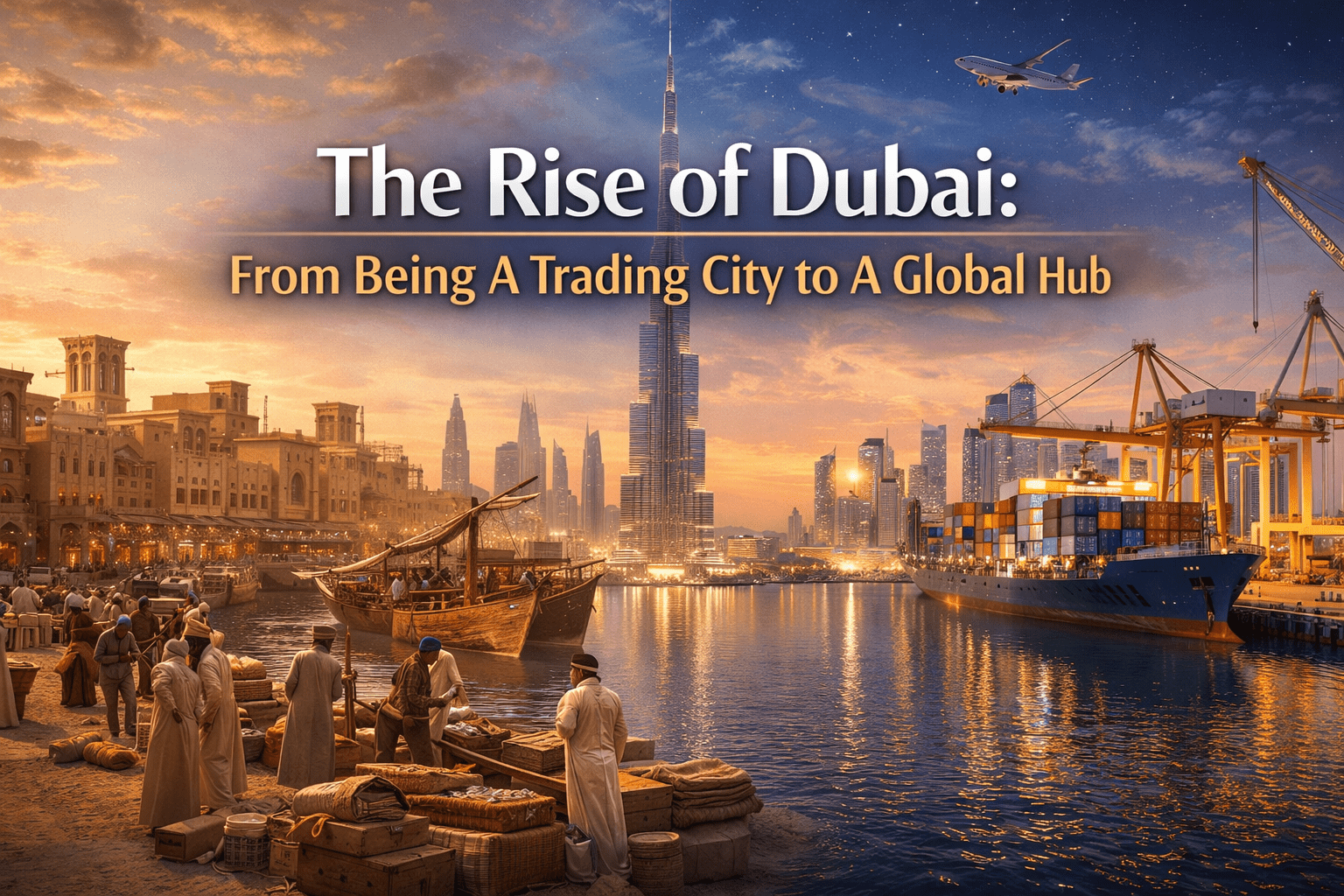
The Dubai Transformation into Global City is one of the most remarkable success stories in modern history. What was once a small fishing and trading settlement has evolved into a powerful global hub. Today, Dubai represents luxury, innovation, and economic strength, attracting investors, tourists, and entrepreneurs from around the world.
Certainly, Dubai did not grow overnight. Instead, leaders followed a clear and long-term strategy. They focused on strong policies, transparent regulations, and smart investments. Moreover, they welcomed global talent and businesses. Therefore, Dubai achieved rapid and sustainable growth.
Early Dubai
Dubai’s recorded history dates back to the 18th century when the Bani Yas tribe and later the Al Maktoum family used to live there. Their primary occupation was fishing and pearl diving. The geographical advantage of the region was Dubai Creek, which was the original and natural harbour for regional trade. Its strategic location, between Asia, Europe and Africa, made it an ideal stop for merchants travelling to and from India, China, Egypt and the Middle East. Gradually the pearl industry became the backbone of the region and by the 1900s, a large population of Dubai depended on it.
Visionary leadership
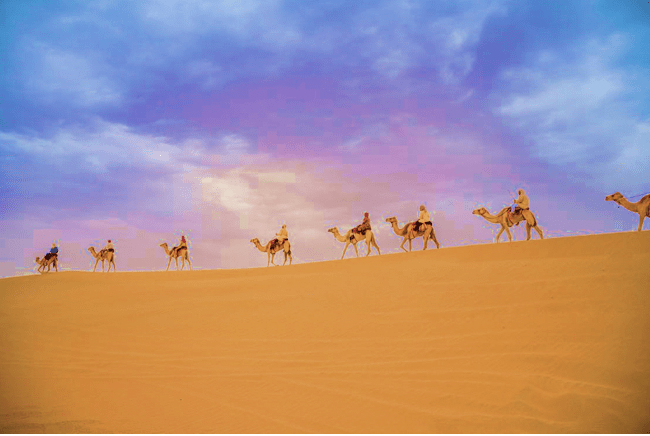
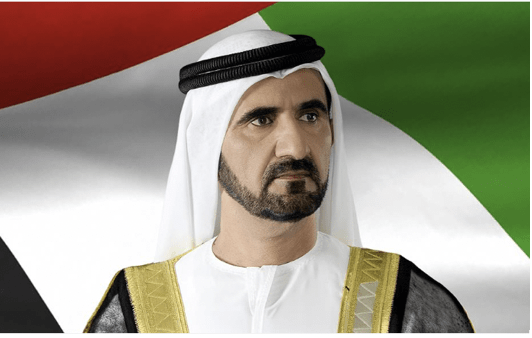
Dubai witnessed the charisma of visionary leadership very early. One of the key drivers of Dubai’s growth and success is the consistent vision of the Al Maktoum ruling family, which has ruled over Dubai since the 19th century. Maktoum bin Hasher Al Maktoum was one of the early rulers of Dubai who shaped the future of Dubai. In the early 1900s, he gave exemptions to foreign traders and offered attractive business proposals. These policies attracted traders from Persia, India and East Africa. This made Dubai emerge as an active trading port in the Gulf region and earn the reputation of being the ‘City of Merchants’.
The later rulers continued the tradition of practicing progressive policies. One of the most influential leaders of Dubai is Late Sheikh Rashid Bin Saeed Al Maktoum, who has been instrumental in transforming the city into a global economic powerhouse. Moreover, he invested a lot in development and infrastructure projects in Dubai, such as roads, schools and hospitals.
Discovery of oil
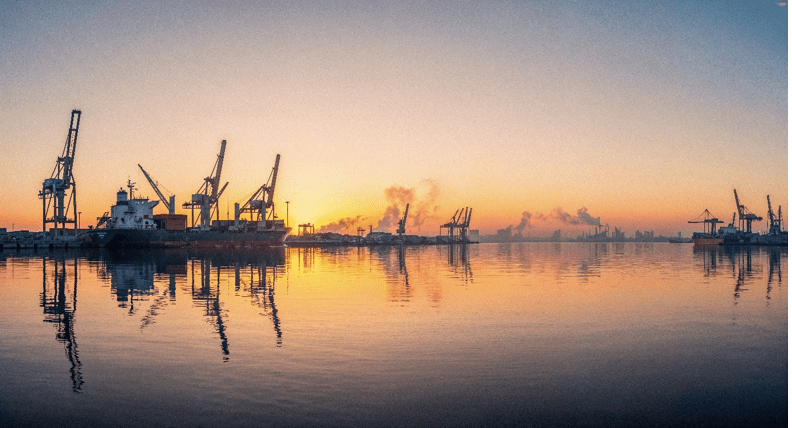
Oil was discovered in Dubai in 1966 which gave the government the necessary revenue for the growth of the city. In the early seventies, Dubai began to send out the shipments of oil. This brought in an immense amount of wealth, which was invested in infrastructure, education and healthcare. However, the discovery of oil was a turning point but not Dubai’s final goal. The ruler of Dubai decided that Dubai’s long-term economic vision should not be dependent on oil alone. As a result, today oil contributes less than two percent of Dubai’s GDP. Today, sectors such as tourism, finance, trade, logistics dominate Dubai’s economy.
Emerging as a global trading hub
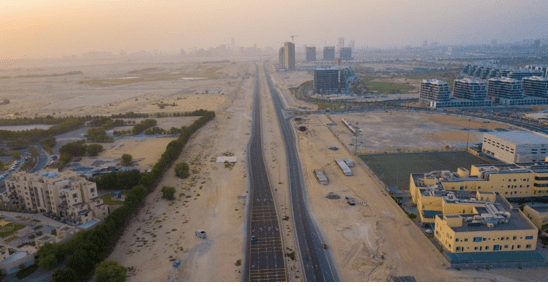
As Dubai invested oil revenues in building infrastructure, Dubai’s transformation as a global trading hub accelerated. The city emerged as pro-business governance and efficient policy implementation. One of the landmark developments was the building of Jebel Ali Port, one of the world’s largest man-made harbors. Jebel Ali Free Zone was created were government allowed the foreign companies to operate with major tax benefits. This zone which began with fewer than 20 companies in 1985, now hosts about 10,000 businesses from all around the world.
The 1990s marked a turning point of Dubai’s history, as Dubai International Airport was expanded and Emirates Airlines connected Dubai with the rest of the world. Dubai Shopping Festival was launched which established Dubai as a shopping destination of the world. The era of 2000s was charaterised by rapid construction as Dubai completed iconic projects of the Burj Khalifa, the Palm Jumeirah and the Dubai Mall. Dubai soon emerged as a destination for luxury tourism and attracted investments from all over the world.
Some key policies that fueled growth in Dubai were –
- Creation of Free Trade Zones that welcomed foreign companies to work with minimum restrictions.
- The city maintained low taxes to attract entrepreneurs and multinational companies.
- Dubai prioritised infrastructure and created world-class roads, airports, ports, metro system, before demand even existed.
- Dubai built one of the world’s busiest aviation hub which made it as a connecting bridge between Asia, Europe and Africa.
Progressive policies that paved the path for Dubai’s rise
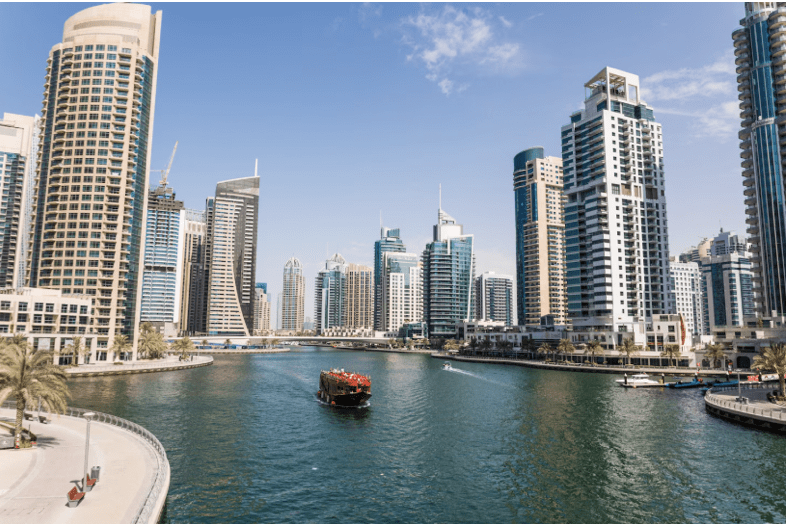
Dubai is today a global city that is known for its skyscrapers, luxury hotels, a diverse cultural hub, world-class infrastructure and more. The city has emerged as a neutral and stable economic hub in the Middle East. Dubai’s transformation offers several lessons in best practices that other cities can learn –
- Long-term strategic planning by leaders can change the destiny of the cities.
- Dubai earned from oil but never depended on it for growth. Instead, it created multiple revenue models to thrive.
- Dubai emerged as global crossroads by building ports, airports and global logistics centres.
- Low taxes, free trade zones, transparent regulations made foreign investors trust Dubai.
- Dubai welcomed everyone from all nationalities and cultures, creating a global and talented workforce.
Indians a favored community in Dubai
Indians are today one of the largest expatriate communities in Dubai. Dubai is an open and multicultural city where all are welcome. The relationship between India and Dubai dates back centuries through maritime trade. Today, several Indian companies operate in Dubai and thousands of Indians work in Indian and multinational companies. The major trading networks connect Dubai with Mumbai, Gujarat and Kerala. Since Indians are skilled in technology, finance and medicine and also come with strong entrepreneurial culture, the Dubai leadership values them. Today, Dubai is considered a mini India outside India. For instance, Meena Bazaar in Bur Dubai is known for its vibrant streets full of Indian jewellery, antiques, exotic clothes and cuisine. Today, UAE is India’s third-largest trading partner, after America and China and the second-largest export destination as well.
Bollywood and celebrity influence
India’s Bollywood industry and other key celebrities have played a pivotal role in Dubai’s success. Over the past two decades, Dubai has become the destination for film shoots, celebrity real estate investment and a second home for many celebrities. Dubai regularly hosts film festivals, concerts and film events, strengthening its reputation as a thriving global hub. Actors like Shah Rukh Khan have invested heavily in Dubai’s real estate market and served as a brand ambassador for its tourism campaigns. Actors Salman Khan and Amitabh Bachchan have also bought properties in Dubai.
Actor Vivek Oberoi has set up a second home and significant business empire in Dubai with a focus on luxury real estate, lab-grown diamond jewellery. The story of Rizwan Sajan will surely inspire you. Reportedly being the richest Indian in Dubai, he is the founder and Chairman of Danube Group, a leading name in the business of construction, home décor and real estate. Coming from a humble background in India, Rizwan’s business has an annual turnover of more than $2 billion. Actors Ranbir Kapoor and Alia Bhatt visited Dubai in late 2025 to launch DAMAC Islands 2, a new luxury waterfront community, which features high-end villas and townhouses with a tropical theme. The celebrity investments in Dubai have over the decades shaped investors’ confidence in Dubai making it a global realty hub.
Wrapping up
Dubai’s journey from being a pearl-diving village to one of the most dynamic global cities, is one of the most remarkable economic transformations in the world. With its visionary leadership, bold policies, transparent regulations and heavy investments in infrastructure, Dubai today has emerged as a hub for tourism, real estate, finance and innovation. Today, Dubai stands as a shining example of how strategic governance, investor-friendly policies and global collaboration can transform a desert settlement into a thriving global city.



Join The Discussion